
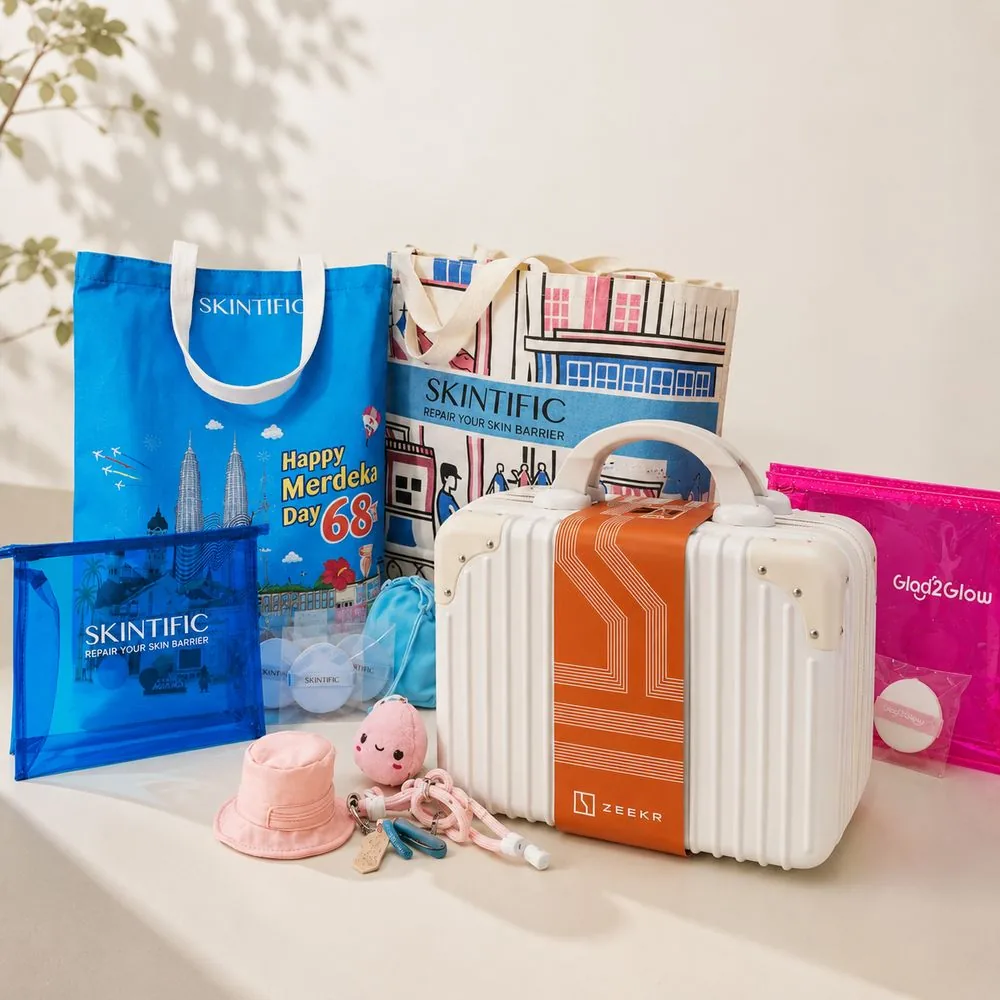
What custom merchandise includes
Custom merchandise is any branded or purpose-built product created for a campaign, launch, event, gifting programme or retail moment. The right choice begins with the job the item must do—not with a catalogue. Common briefs include GWP, door gifts and PR kits, corporate gifts, event merchandise, tote bags, tumblers, apparel and custom packaging.
Start with the audience and campaign
Define who receives the item, when they receive it and what you want them to remember. A practical door gift has a different job from a press kit designed to introduce a product story. Quantity, budget per set and required delivery date should be part of the first brief.
Choose the right level of customisation
- Brand an existing product: add approved artwork to a suitable ready item.
- Adapt a product: adjust colours, materials, packaging or components where feasible.
- Develop a custom product: create a more distinctive item when the campaign, quantity and timeline support it.
Local and overseas sourcing
There is no single best production country for every item. Local production can suit certain timelines and methods; overseas production can open different product or pricing options. Onii Studio evaluates both routes around product fit, quality, budget and delivery—not a blanket assumption that every order comes from China. For a focused explanation, read the overseas sourcing guide.
MOQ, sampling and lead time
MOQ and timing vary by material, decoration method, quantity, tooling, packaging and production route. Sampling helps confirm scale, colour, placement and construction before the main run. The MOQ and turnaround guide explains the stages in more detail.
How Onii Studio manages the project
The working sequence is brief, product direction, artwork and development, sampling, production, quality control, logistics and delivery. One local team keeps the commercial and production decisions connected throughout the project.
A useful first brief
- Campaign purpose and recipient
- Desired product or references
- Quantity and target budget
- Required delivery date and location
- Artwork, colours and packaging needs
With those details, the team can recommend a practical route rather than forcing an unsuitable product or unsupported promise.